

Two Money Mindsets: Build to Money or Money to Build. Which One Drives You?
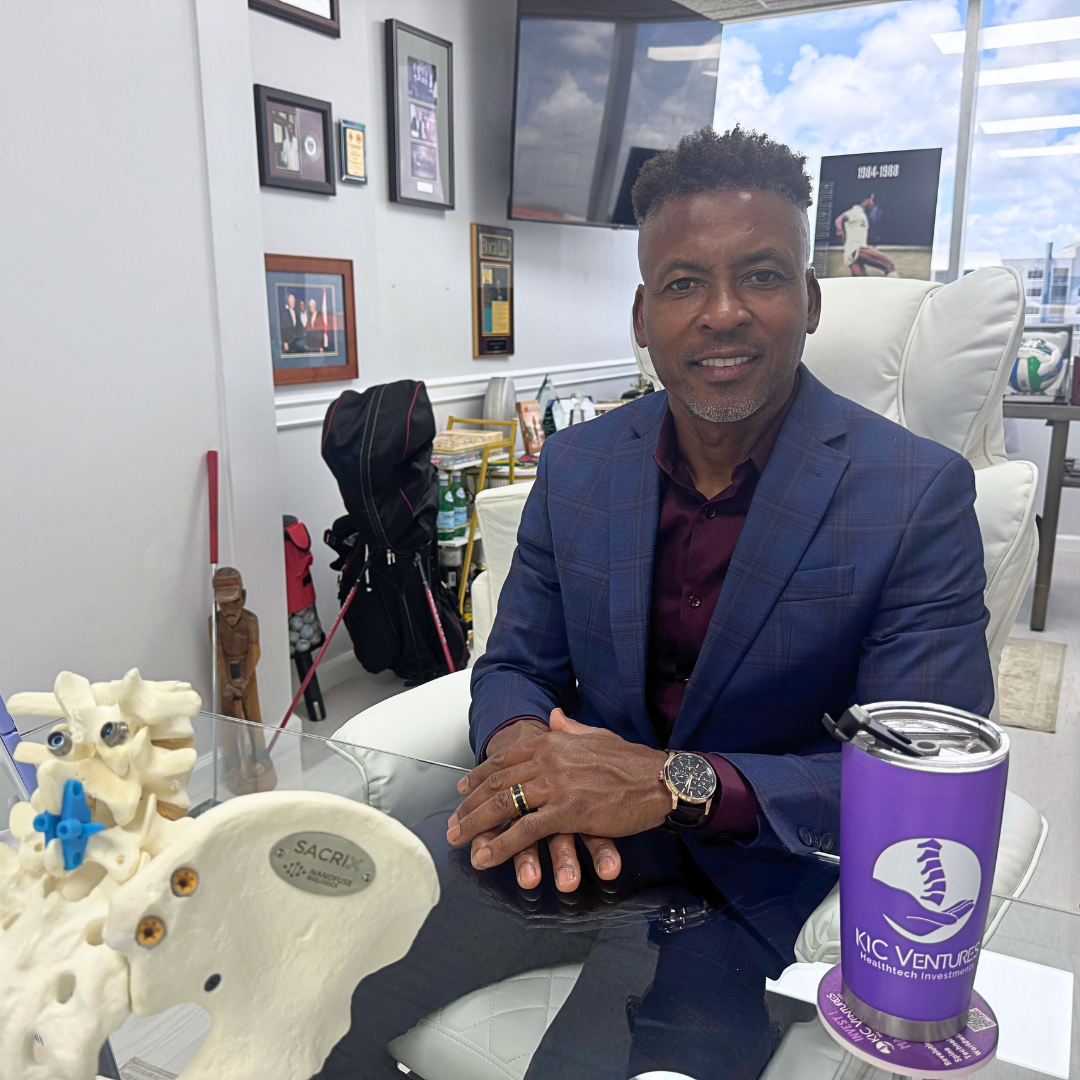

From $47 at Columbia University to Building KIC Ventures: How My Understanding of Money Changed My Life.
When I arrived in New York City from Jamaica to attend Columbia College, I had just $47 in my pocket.
One of the first things I did was find a work-study job in the John Jay cafeteria.
I worked. I got paid. And I ate for free.
Not a bad arrangement for a student with $47!
At that moment in my life, every dollar mattered.
Money was my scorecard. I was building to money.
Today, decades later, I spend more than 95% of my business time investing capital to build companies, develop technologies, acquire assets, and create opportunities for others.
But something much more important than my bank account has changed.
My understanding of what money is for.
One lesson continues to guide me:
Making money and building wealth are related, but they are not the same activity.
When you are building to money, you ask:
How can I earn more?
When you are using money to build, you ask:
What can I create with the capital I have?
And perhaps there is a third question, one that becomes more important to me as I get older:
What am I investing money to build, and what value will it create for others?
That is the question that inspires me today.
I admire entrepreneurs who did not see money as the finish line. They saw it as the fuel to build something bigger than themselves.
Elon Musk, Jeff Bezos, Fred Smith, Robert and Sheila Johnson, Robert F. Smith, and Aliko Dangote come to mind.
Their journeys are different. Their risks were different. Their opportunities were different.
But I see a common thread.
They did not simply ask how much money they could make. They asked what they could build.
My own journey has been far more modest, but that same question has guided many of my decisions.
And I wonder how many of you reading this have moved between these two mindsets without consciously recognizing it.
1. Columbia University: When $47 Made Money My Scorecard
At Columbia, my most valuable resource was my time.
I exchanged hours of work for money. My cafeteria job helped me survive while I invested in my education.
Every paycheck mattered.
Every free meal mattered.
But something else was happening.
While I was building to money, I was also building myself.
I was earning money in the cafeteria while investing in an education that would eventually become far more valuable than those wages.
My first lesson: Sometimes the most important asset you are building is yourself.
Think about your first job.
Were you working simply to earn money?
Or were you also acquiring knowledge, skills, and relationships that would create opportunities later?
I did not fully appreciate that distinction at the time.
2. Andersen Consulting: Building My Portfolio, Not My Bank Account
After graduating from Columbia, I joined Andersen Consulting, now Accenture, in New York City.
My goal was to gain experience in financial services and business information systems.
Living in New York was expensive. My salary was fixed.
But I was learning how organizations operated, how financial systems worked, and how technology could transform businesses.
I was building my portfolio of knowledge, experience, relationships, and business skills.
Money was no longer my primary scorecard.
I was investing my time in becoming more valuable.
I believe this is a stage many professionals experience.
You may be earning a salary that barely keeps pace with your expenses, yet gaining knowledge and experience that will eventually change your earning power.
My second lesson: Your financial progress is not always visible in your bank account.
Sometimes you are building the person who will eventually create the wealth.
3. University of Pennsylvania: When I Began Using Money to Build
Years later, after medical school, orthopedic residency, and spine fellowship, I began my academic career as a spine surgeon at the University of Pennsylvania.
Once again, I earned a fixed salary.
During the day, I treated patients, performed surgeries, taught residents, and conducted research.
At night, I worked on my inventions.
One of those inventions became the MANTIS percutaneous pedicle screw system.
With a fixed academic salary, I had to make deliberate choices about how I used the money I earned.
I could save it, invest it for retirement, or spend it on my lifestyle.
Instead, I chose to invest in developing new medical technology.
Why?
Because I believed we could develop a better way to perform minimally invasive spine surgery.
I wanted to create something that did not exist.
We eventually sold MANTIS to Stryker.
That experience fundamentally changed how I thought about money.
I was no longer simply working to earn money. I was using money to build an asset.
The satisfaction was not just financial.
It was knowing that something we developed could become part of the technology available to surgeons treating patients.
My third lesson: Money can support your life, but it can also help you create something that extends beyond your own work.
Ask yourself: Have you ever believed in an idea strongly enough to invest your own money and time to make it a reality?
4. Private Practice: Why I Returned to Building to Money
After academia, I made another deliberate decision.
I entered private practice.
I saw patients, performed spine surgeries, and built a practice employing more than 40 people.
I worked relentlessly.
I was a machine focused on seeing patients, performing surgeries, building revenues, collecting money, and growing the business.
I was building to money again.
Was I going backward?
Absolutely not.
I needed capital to finance the next stage of my journey.
Revenue creates independence.
Profits create choices.
Cash flow creates opportunities.
But even while I was building my surgical practice, I was redirecting the money it generated toward something else.
I was using that money to build KIC Ventures.
I began to understand that these two mindsets were not opposites.
They could work together.
My fourth lesson: Sometimes you must build to money so that you can use money to build.
This is a question worth considering if you own a business or have a successful professional career.
Are you working to earn more money so you can maintain a more expensive lifestyle?
Or are you using some of that money to build assets that may create value long after you stop working?
There is no universal answer.
But there is an important difference.
5. The Entrepreneurs I Admire: When Money Became the Fuel, Not the Finish Line
As I transitioned from earning income to allocating capital, I became increasingly interested in entrepreneurs who made similar choices on a much larger scale.
I do not admire them simply because they became billionaires.
I admire their willingness to put money, reputations, and years of their lives behind ideas they believed could change something.
Consider these examples.
Elon Musk: What Would You Do With $180 Million?
Imagine selling your company and receiving approximately $180 million after taxes.
You could hire a wealth manager, diversify your investments, buy a beautiful home, and enjoy financial independence for the rest of your life.
Elon Musk made a different choice.
After the PayPal sale, he committed approximately $100 million to SpaceX, $70 million to Tesla, and $10 million to SolarCity.
He put an extraordinary amount of his personal wealth at risk.
He was not trying simply to make his retirement more comfortable.
He wanted to build businesses addressing challenges in space exploration, transportation, and sustainable energy.
Not every decision he has made deserves agreement or admiration.
But I admire the willingness to invest heavily in ambitious ideas rather than treating financial success as the end of the journey.
The PayPal money was not his finish line. It became the capital for his next mission.
Ask yourself: If you suddenly had enough money to retire, would you stop working?
Or would you finally have the resources to pursue the ideas you have always wanted to build?
Jeff Bezos: Where Others Saw Costs, He Saw What Amazon Could Become
Jeff Bezos left a successful career at the investment firm D. E. Shaw to start Amazon.
That decision itself reflected a willingness to trade professional security for the opportunity to build.
But what I admire even more is his long-term approach to deploying capital.
Consider Amazon Prime.
When Amazon launched Prime in 2005, it offered customers unlimited two-day shipping for an annual membership fee.
Providing that service required substantial investment.
A leader focused only on near-term profits could have viewed the additional shipping expense as money leaving the company.
Bezos saw an opportunity to build something much more valuable.
Customer loyalty.
Convenience.
Repeat purchases.
A stronger relationship between Amazon and its customers.
The question was not simply, "How much will this cost?" It was, "What kind of business can this investment help us build?"
That distinction matters.
Many businesses can improve short-term profits by reducing investment.
Fewer have the patience to deploy capital today for value that may take years to emerge.
Fred Smith: What Would You Do With a $4 Million Inheritance?
Fred Smith inherited approximately $4 million.
Imagine being a young man with that financial foundation.
You could invest it conservatively and pursue a comfortable life.
Smith had another idea.
He wanted to build a delivery system that could reliably move packages across the country overnight.
It required aircraft, sorting facilities, employees, technology, and substantial additional financing.
He invested his inheritance and raised outside capital to help create Federal Express.
Today, FedEx is a global logistics company.
What interests me is not simply the financial return.
Smith looked at $4 million and saw the possibility of building an entirely new logistics network.
The money was not the accomplishment.
The enterprise was.
Robert and Sheila Johnson: Building BET With a Vision and Limited Capital
Robert L. Johnson and Sheila Johnson helped build Black Entertainment Television into a major American media enterprise.
Robert Johnson began with approximately $15,000 in borrowed money and secured an early $500,000 investment from cable entrepreneur John Malone.
They did not begin with a fortune.
They began with a vision for a television network serving an audience they believed was underserved.
BET eventually grew into a major cultural institution.
In 2001, Viacom acquired BET in a transaction valued at approximately $3 billion.
Robert Johnson became the first African American billionaire.
But what particularly interests me is what happened afterward.
He continued building and investing through The RLJ Companies.
He did not treat the BET sale as the end of his business journey.
He moved from building one enterprise to allocating capital across multiple businesses.
That transition resonates with my own ambitions at KIC Ventures.
Robert F. Smith: Building an Investment Platform From Knowledge
Robert F. Smith developed his expertise in technology investment banking at Goldman Sachs.
He learned how technology companies operated, how transactions were structured, and how businesses could create value.
He could have continued building a prestigious career inside an established financial institution.
Instead, he founded Vista Equity Partners in 2000.
He recognized the potential of enterprise software businesses and built an investment organization focused on that opportunity.
Vista has grown into a firm managing more than $100 billion in assets.
What I admire is the progression.
First, he built his knowledge. Then he built an organization capable of attracting and deploying capital at scale.
His journey reminds me of an important lesson from my years at Andersen Consulting.
The expertise you develop while earning a salary may eventually become the foundation for building something much larger.
Aliko Dangote: From Trading Products to Building the Industries That Produce Them
Aliko Dangote began his entrepreneurial journey in Nigeria with family financing and a commodity trading business.
He traded products such as cement, sugar, and rice.
Trading generated revenues and provided experience.
But he did not stop at buying and selling products.
He increasingly invested in manufacturing and industrial infrastructure.
His businesses expanded into cement production, sugar refining, and other industries, including the enormous Dangote Refinery project.
What interests me is the transition.
He moved from earning money through transactions to investing capital in the productive assets behind those transactions.
Instead of simply trading cement, he invested in producing it.
Instead of relying only on existing infrastructure, he helped build new industrial capacity.
That is money to build on an extraordinary scale.
6. What Do These Entrepreneurs Have in Common?
They did not start with the same advantages.
Some inherited capital.
Some borrowed money.
Some developed expertise through employment.
Some sold companies and reinvested the proceeds.
Some persuaded outside investors to finance their ideas.
And not every investment they made succeeded.
Their paths also involved risks that would not be appropriate for everyone.
But I see one common mindset.
They viewed money as a resource to create something, not simply a number to accumulate.
This is not an argument against saving, diversifying investments, or hiring professional wealth managers.
Those are important ways to protect financial security and pursue long-term financial goals.
Nor do I believe everyone needs to become an entrepreneur.
The distinction is about the role you want money to play in your life.
Are you accumulating money primarily for security and financial independence?
Or are you deploying money to build something you believe should exist?
For many people, the answer is both.
And it may change over time.
7. KIC Ventures: From Performing Surgeries to Allocating Capital
As KIC Ventures developed, my questions changed.
Instead of asking how many more patients I could see or how many more surgeries I could perform, I began asking:
What companies should we build?
What technologies should we acquire?
What problems are worth solving?
What intellectual property could we develop?
What teams should we assemble?
How can we use capital to create businesses that grow beyond my personal labor?
Today, I estimate that more than 95% of my business focus is on using money to build.
We invest in medical technologies, businesses, intellectual property, and people.
My scorecard is no longer simply how much money I personally collect.
It is the value of what we build with the capital we deploy.
I continue to learn that being a capital allocator requires a different discipline from being a high-income professional.
Every investment competes for limited capital.
Every opportunity carries risk.
Every dollar committed to one business cannot be invested in another.
The responsibility is not simply to spend money.
It is to make thoughtful decisions about what is worth building.
8. Our Physician Investors: Two Money Mindsets Working Together
Several of our private investors are physicians.
They work hard, earn income, save, and invest with us to pursue long-term financial goals, including retirement.
I am grateful for their confidence and trust.
Their investment objectives and our business-building objectives are connected.
They invest capital with the goal of growing their wealth. We deploy that capital with the goal of building valuable businesses.
Both sides accept risk.
Both require patience.
Both depend on disciplined execution.
This relationship has taught me something important.
Not everyone needs to operate a company to create wealth.
Some people are excellent at earning and investing capital.
Others specialize in building and operating enterprises.
And some move between both roles.
Wealth creation often depends on bringing those capabilities together.
It also reminds me that capital allocation is a responsibility.
When people invest money they worked hard to earn, they are trusting us to use that capital thoughtfully.
That trust matters to me.
9. The Money Lesson I Want to Leave Behind
When I arrived at Columbia University with $47, my question was simple:
How can I earn enough money to survive?
When I began my career, the question became:
How can I develop the skills and experience to become more valuable?
When I was earning a fixed academic salary at the University of Pennsylvania and developing MANTIS, I began asking:
What can I create with the money I earn?
And today, as Founder, CEO and Chief Investment Officer of KIC Ventures, I ask:
What are we investing money to build?
I think about that question as an entrepreneur, investor, physician, and father.
I think about the companies we build, the people we employ, the technologies we develop, the patients who may benefit, and the investors who have trusted us with their capital.
I have come to believe that money is most meaningful when it gives us the opportunity to build something we believe in.
That does not mean everyone should start a company or risk their savings.
Financial security matters. Retirement matters. Protecting your family matters.
But once you have earned money, another question becomes possible.
What do you want that money to accomplish?
This is one of the lessons I explore in my new book, Money Lessons: Learn These Keys Now—or Pay to Learn Them Later.
I have learned many lessons about money through experience.
Some were inexpensive.
Others required significant personal sacrifice.
Some required years before I understood their value.
But one lesson continues to guide me:
Making money and building wealth are related, but they are not the same activity.
Two Money Mindsets
"Build to money, and your work creates income. Use money to build, and your capital creates businesses, assets, and opportunities for others to build wealth."
— Dr. Kingsley R. Chin, MD, MBA
I started with $47 and a job in the Columbia cafeteria.
Today, I am still building.
The difference is that money is no longer my scorecard. What we build with it is.
Now I would love to hear from you.
Which mindset drives you today?
Are you building to money, or are you using money to build?
And most importantly:
What are you investing money to build?
Explore more of my lessons about money, entrepreneurship, investing, and wealth creation in my new book, Money Lessons: Learn These Keys Now—or Pay to Learn Them Later.
Available on Amazon: https://www.amazon.com/dp/1665791144
Dr. Kingsley R. Chin, MD, MBA Founder, CEO and Chief Investment Officer, KIC Ventures Professor | Board-Certified Orthopedic Spine Surgeon Fort Lauderdale, Florida, USA


Comments