

Do You Doubt or Believe Spine Care Is Entering an Outpatient Interventional Era?
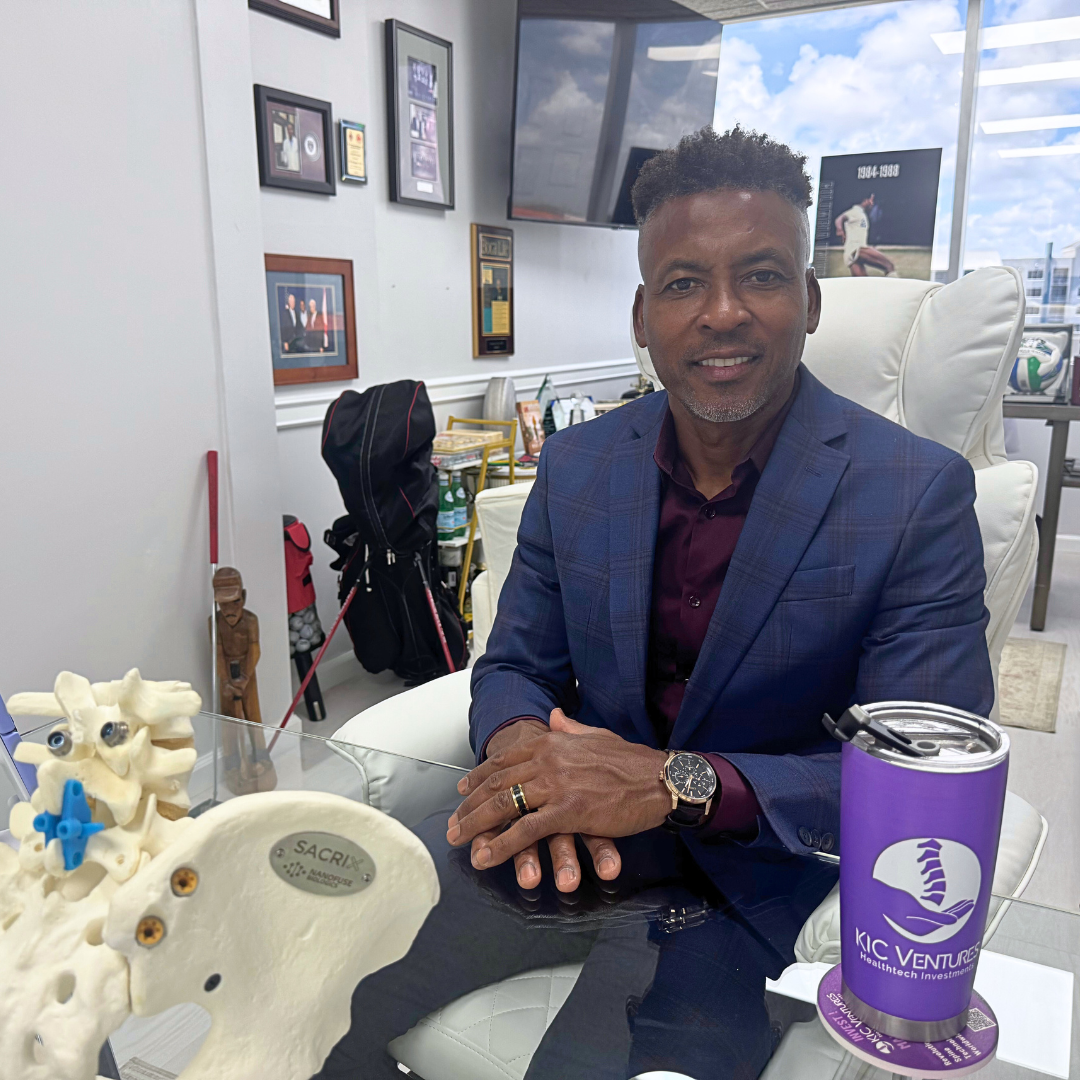

After 25+ Years of Investing and Innovation in Spine, KIC Ventures Is Focusing Capital on What We Believe Is Needed to Make It Happen
Do you doubt it or believe it?
We believe spine care is entering an outpatient interventional era.
If you believe, join the LESS® movement.
Our conviction did not happen overnight. It was shaped by more than 25 years of investing, inventing, operating, treating patients, publishing research, teaching physicians, and learning from successes and setbacks.
Interventional cardiology showed what can happen when a specialty moves toward earlier diagnosis and treatment, less invasive intervention, and preservation of anatomy and function.
That raised a simple question:
Could spine care follow a similar path?
I believe it can. The more important question became what technologies, evidence, physician education, manufacturing, regulatory strategy, and capital would be needed to help make it happen.
That question has directed our journey.
Vision and Innovation Before Capital
We founded Kingsley Investment Company, KIC, in 2005 with a simple mission:
Invest and create value through vision and innovation.
That approach evolved into our 3P Value Creation Framework:
Problem: Identify a meaningful unmet problem.
Predict: Anticipate where medicine and the market are going.
Product: Build the product that changes it.
That philosophy has guided our technologies, acquisitions, and investments ever since.
MANTIS®: Our Landmark Exit
One of the earliest predictions was that spine surgery would move toward less invasive approaches.
That led to the MANTIS® Percutaneous Pedicle Screw System and its eventual sale to Stryker at a 100X ROI.
MANTIS validated our innovation model: identify the problem, anticipate the market, build the technology, create value, and ultimately realize that value through an exit.
MANTIS was the right innovation for its era.
Our responsibility as investors is not to keep rebuilding yesterday's innovation. It is to identify what the next era requires.
Building an Ecosystem, Not Just Products
KIC Ventures was launched in 2013 to focus capital on spine innovation.
The model extends beyond investing. Portfolio companies identify unmet clinical needs, invent and patent technologies, engineer and manufacture products, commercialize them, support clinical research, and educate physicians in safe adoption.
Key opinion leaders bring clinical expertise and challenge assumptions. Physicians provide feedback from patient care. Investigators generate evidence. Engineers turn ideas into products. Patents protect differentiated innovation. Investors provide capital and perspective.
Together, those capabilities form an ecosystem.
Because establishing a new specialty requires more than an implant.
Predicting What Comes Next
AxioMed was acquired in 2014 around the conviction that motion preservation and viscoelastic disc replacement would become an important part of spine care's future.
NanoFuse Biologics followed in 2018 as regenerative biologics became increasingly important alongside less invasive technologies.
By 2019, the vision had expanded beyond products.
The focus became deliberately building the outpatient interventional spine niche.
Physicians were trained, proctored, and mentored through our VET Tour in Fort Lauderdale and SERC programs. The LESS® Society complemented those efforts with CME accredited webinars, scientific exchange, and continuing physician education.
The objective was no longer simply another implant.
It was helping build a specialty.

From Vision to Published Evidence
A new specialty cannot be built on conviction alone. It needs evidence.
Our 2025 Spine Journal publication, “A prospective multicenter randomized controlled trial on safety and procedural competency in SI joint fusion performed by interventional pain physicians trained by a spine surgeon,” studied 276 patients and 47 interventional pain physicians who received structured training from a board certified orthopedic spine surgeon. The authors concluded that the findings support standardized surgeon led training and certification for safe adoption of interventional spine surgery practices. PubMed
Research also follows the technologies. The 2025 Clinical Biomechanics publication, “ASTM biomechanical study comparing the AxioMed lumbar viscoelastic disc to human lumbar disc data,” evaluated AxioMed's viscoelastic lumbar disc against published healthy human lumbar disc biomechanics. PubMed
The Traditional Spine Market Is Changing
At the same time, traditional spine has undergone significant consolidation and restructuring.
Zimmer Biomet separated its spine business into ZimVie in 2022. ZimVie sold that spine business to H.I.G. Capital in 2024 for $375 million. Stryker sold its U.S. spinal implants business in 2025 while specifically retaining Interventional Spine and Enabling Technologies. Zimmer Biomet Investor Relations
NuVasive followed a different path, combining with Globus Medical.
The circumstances behind these transactions differ, but the larger lesson is important.
Traditional pedicle screws and cages remain important technologies. But mature markets face competition, pricing pressure, margin pressure, and a constant need for meaningful differentiation.
That is why KIC's strategy is not to build another broad pedicle screw and cage company.
Capital is being focused on what we believe comes next: outpatient interventional procedures, motion preservation, regenerative biologics, enabling technologies, physician education, and evidence.
Our First Principles of Spine Innovation
Rather than follow what happens to be popular, the portfolio needed principles to determine what deserved to be built.
We call them REP:
A. Restore function B. Early diagnosis and treatment C. Preserve anatomy and motion
REP influences the problems pursued, technologies developed, and capital deployed.
The objective is not simply to make existing surgery smaller. It is to rethink the treatment pathway around earlier intervention, restoration, preservation, and appropriate outpatient care.
Why We Chose Independence
One of KIC's most consequential investment decisions was not only where to deploy capital, but whose capital to accept.
Dependence on institutional capital was deliberately avoided, allowing more than 90 percent insider ownership to be maintained.
That independence matters.
Institutional investors appropriately operate around investment mandates, financial metrics, return expectations, and defined horizons. KIC's closely held structure provides the freedom to make short, medium, and long term decisions based on experience and conviction.
It allows management to remain nimble, invest ahead of a market, protect promising intellectual property, learn from adversity, and stay committed when an important technology takes longer than expected.
“Metrics tell us where we have been. Vision helps determine where we should go next.”
Independence does not replace financial discipline.
Our investors have provided more than $30 million in private capital, supplemented by more than $20 million in growth financing and more than $300 million in reinvested revenues, while maintaining more than 90 percent insider ownership and growing NANISX profitably.
The track record belongs to more than its founders. It includes investors who took calculated risks, physicians who adopted new technologies, KOLs who challenged ideas, researchers who generated evidence, engineers who solved problems, employees who persevered, and patients who trusted their physicians.
Innovation is rarely a straight line.
Our advantage is the ability to combine experience, vision, financial discipline, nimbleness, grit, and a relentless commitment to learn.
The Mission Is Personal
I grew up in Jamaica, raised by a single mother.
Long before becoming a spine surgeon, professor, entrepreneur, or investor, that experience taught me that vision creates opportunity and grit sustains it.
Those lessons still guide how I build.
After more than 25 years, outpatient surgery, motion preservation, regenerative biologics, enabling technologies, intellectual property, published evidence, physician education, and disciplined capital are converging.
I believe they are creating the conditions for a new interventional era in spine care.
That is where our capital is being focused.
Do you doubt or believe?
I believe.
Meet Us at NASS 2026
NASS 2026 takes place October 14 through 17 in San Antonio, Texas. I will be presenting Saturday morning, and KIC Ventures will be there to share what is being built. The meeting dates and location are confirmed by NASS. Spine
We are also hosting a breakfast meeting for physicians, innovators, investors, and industry partners interested in discussing where spine care is going next.
Join the LESS® movement.
Invest in our proven track record and leadership as we build the future of spine care.


Comments