

The De-Risked ASC: Navigating the Outpatient Capacity Crunch
- Anshul Jain

- May 22
- 2 min read

"As institutional private equity aggressively buys up local surgical centers, will you remain an enterprise owner or become a high-volume tenant?"
The migration of high-acuity surgical procedures from the inpatient setting to the Ambulatory Surgery Center (ASC) is no longer a forward-looking trend; it is a structural mandate. Driven by regulatory expansions that have transitioned hundreds of complex cardiac, orthopedic, and spine codes to the outpatient list, the sector has entered an aggressive consolidation phase.
This massive migration has triggered an Outpatient Capacity Crunch. As corporate networks and national management platforms race to secure ASC real estate, independent physicians face a critical inflection point: they must either secure their infrastructure equity now or risk being locked out of the very facilities they fill with cases.
The Blueprint for Outpatient Infrastructure Sovereignty
1. Navigating the Real Estate Squeeze
Medical outpatient building occupancy has reached historic highs across growth corridors, while new construction completions have significantly slowed under tighter lending environments.
The Clinical Context: ASCs are purpose-built, heavily regulated physical spaces requiring extensive capital expenditures for specialized air handling, sterilization, and structural layouts. They cannot be easily retrofitted or quickly duplicated.
The Investment Risk: If you do not hold equity in the physical plant or the operational entity of your local center, you are vulnerable to rising lease rates and shifting corporate block times that favor institutional groups over independent clinicians.
2. Capturing the Multi-Specialty EBITDA Multiple
The buyer landscape for ASCs has matured, creating a stark valuation divide between isolated, single-surgeon centers and integrated platforms.
The Operational Filter: Individual, single-specialty ASC units typically trade at modest minority multiples of 3x to 5x EBITDA due to surgeon dependency and concentration risk. Multi-specialty, multi-surgeon centers command premium multiples of 6x to 10x or higher.
The Strategic Takeaway: De-risking your outpatient footprint requires building or participating in multi-specialty joint venture models. Syndicating with peer surgeons across complementary disciplines (e.g., orthopedics, spine, interventional pain) diversifies the case mix and structurally elevates the enterprise value of the facility.
3. Maximizing Capital Autonomy via SDIRAs
Securing early-stage equity in an ASC or a regional management platform traditionally required significant liquid capital, which often sat exposed to high personal income tax brackets.
The Financial Reality: Utilizing a Self-Directed IRA (SDIRA) allows physician-investors to deploy pre-tax or Roth capital directly into private clinical placements and real estate syndications.
The Vertical Integration Move: Funding your infrastructure equity through an SDIRA shields the resulting distribution yields and facility fee dividends from immediate taxation, allowing your personal net worth to compound at the same rate as your outpatient volume.
Guarding Your Clinical Footprint
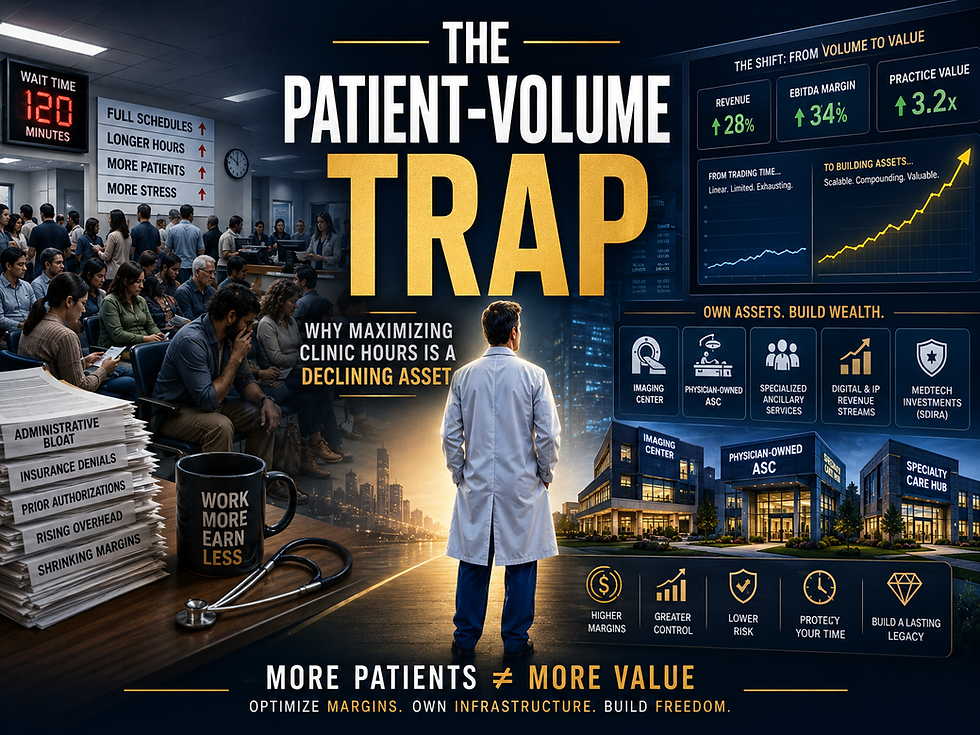
The outpatient surge represents the largest wealth transfer in modern surgical history. The value is no longer concentrated solely in the performance of the procedure, but in the ownership of the site of service.
By taking an agentic approach to infrastructure ownership, you insulate your practice from corporate roll-ups and secure your financial autonomy. Own the bricks, own the blades, and ensure your legacy is anchored on ground you control.
Financial Education Disclaimer: These articles are for educational and informational purposes only and do not constitute financial, investment, or tax advice. DoctorpreneurNews is not a licensed fiduciary. Private equity, real estate, and MedTech investments involve significant risk, illiquidity, and are not suitable for all investors.


Comments