

Evolution, Revolution… or Ahead of Time?
- Kingsley R Chin MD MBA
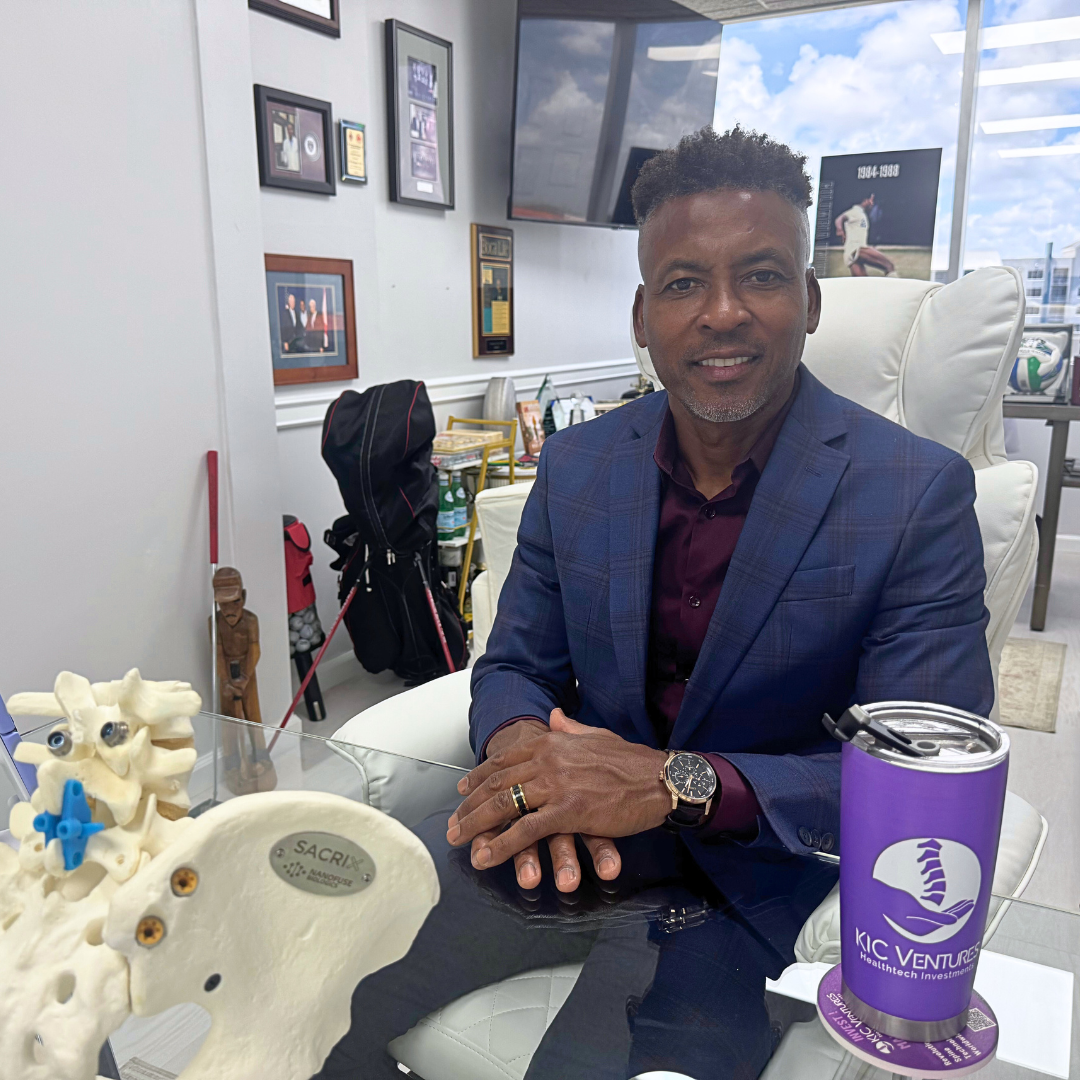
- Mar 11
- 4 min read
Updated: Mar 17
From Spinal Fusion to Anatomy & Motion Preservation: Redefining the Future of Outpatient Interventional Spine Surgery.
Dr. Kingsley R. Chin MD, MBA
Professor, Orthopedic Spine Surgery | CEO KIC Ventures
Dr. Jason A Seale MBA

Nothing else in the world… not all the armies… is so powerful as an idea whose time has come.”— Victor Hugo
Have you ever wondered why spine surgeons admire fixing the X-ray?
Why do so many patients — even with great post-operative X-rays — still end up needing revision surgery years later?
Most spine surgeons would probably agree on a few things.
Preserving anatomy and motion are desired over fusion.
That agreement raises a difficult question.
If preserving anatomy and restoring function are so fundamental… why has so much of spine surgery evolved around removing motion rather than restoring it?
Back in 2007, together with a group of spine surgeons, we started SpineFrontier around a simple but ambitious belief:
Surgeons should build the technology they wish existed.
Physicians invested alongside us with a shared commitment to develop best-in-class spine technologies designed by surgeons, for surgeons.
For us, best-in-class has always started with anatomy.
Instead of designing technology by studying competitors, we focused on understanding the natural biomechanics of the spine and asking a different question:
How can technology work with anatomy rather than against it?
At the time, spine surgery had largely converged around a familiar paradigm:
Pedicle screws
Rods and plates
Interbody fusion
We evolved within that world — developing technologies that made procedures smaller, more precise, and more reproducible.
But over time, something began to trouble us.
We started seeing the revision epidemic.
Adjacent segment disease
Failed back surgery syndrome
A growing population of patients living with chronic pain after spine surgery
At the same time, interventional pain management was expanding rapidly to help treat these patients.
Eventually that ecosystem collided with an even larger crisis — the opioid epidemic.
And that moment forced us to step back and ask a different question.
Not: How do we fix the X-ray?
But: What if the goal was to restore function?
What if spinal disease could be diagnosed and treated earlier — before it required major reconstructive surgery?
What if the goal was preserving anatomy and motion, not eliminating it?
Looking into those questions changed how we thought about spine care.
Our thinking crystallized around three principles we now call REP:
Restore function
Early diagnosis and treatment
Preserve anatomy and motion
Those principles led us to rethink surgical exposure itself.
Instead of simply pursuing Minimally Invasive Spine Surgery (MISS), we began advancing a deeper philosophy:
LESS — Less Exposure Spine Surgery.
The goal was not just smaller incisions.
The goal was less disruption of normal anatomy while restoring function earlier in the disease process.
Our technologies evolved alongside that thinking.
Facet fixation
Interspinous stabilization
Biologics designed to support healing
But eventually we realized something even larger.
These ideas weren’t just incremental improvements to existing surgery.
They pointed toward an entirely new category of care.
We began calling it Interventional Spine Surgery — bridging the gap between pain management and reconstructive spine surgery.
To pursue that vision, we created NANISX, a company dedicated to advancing this emerging field.
And we committed to one of the most ambitious technologies in spine care:
AxioMed’s viscoelastic disc — designed to restore natural spinal motion.
At times, this journey has felt like stepping outside the matrix of traditional thinking in spine surgery.
Looking at the problem differently.
Questioning long-held assumptions.
Reimagining how spinal disease might be treated earlier — and more physiologically.
Which brings us back to the question.
Is this an evolution?
A revolution?
Or simply an idea that arrived ahead of its time?
Perhaps the real answer will not come from us.
It will come from the surgeons and patients who ultimately decide whether the future of spine care should focus on:
Restoring function
Intervening earlier
Preserving anatomy
So I’m curious:
When you look at the future of spine care…
Do you believe the next major advance will come from better fusion technologies —
or from restoring and preserving natural spinal motion?
#SpineSurgery #InterventionalSpineSurgery #MotionPreservation #Fusion #MISS #LESS #LESSExposureSpineSurgery #OutpatientSpineSurgery #SpinalFusion #MinimallyInvasiveSurgery #SpineInnovation #HealthcareInnovation #MedTech #FutureOfSpine #LESSMovement #KICVentures
About KIC Ventures
Founded in 2013, KIC Ventures is a physician-founded and physician-led healthtech private equity firm and the creator of the LESS Exposure Spine Surgery (LESS™) treatment philosophy and technologies. Its portfolio includes MedTech spine-focused companies such as NANISX, AxioMed , and NanoFuse Biologics, and technology-driven ventures including Mediconnects and AxioMedX Smart Disc Technologies .
KIC Ventures partners with physicians to design and invest in innovative solutions that empower IPM physicians, orthopedic spine surgeons, and neurosurgeons with advanced, anatomy-preserving technologies.
We invent, innovate, and improve.
Authors
Dr. Kingsley R. Chin MBA is a board-certified Professor of Orthopedic Spine Surgery and honors graduate of Harvard Medical School and the Harvard Combined Orthopedic Residency Program. He did his spine fellowship with Dr. Henry H Bohlman. He was Chief of Spine Surgery at the University of Pennsylvania.
Dr. Jason A. Seale MBA is a medical doctor and entrepreneur. He is the clinical director at the LES Clinic.
Disclaimer:
The information provided in this article is for informational and educational purposes only. Doctorpreneur News, KIC Ventures, the authors, and any companies referenced do not provide investment, tax, financial, or legal advice. This article does not constitute an offer to sell or a solicitation of an offer to buy any securities.
Any investment involves risk, including the potential loss of principal. Prospective investors should conduct their own independent due diligence and consult with licensed financial, legal, and tax professionals before making any investment decision.


Comments