

100 PubMed Publications: A Dream I Had as a Medical Student. What Lessons Can My Journey Teach You About Pursuing Your Dreams?
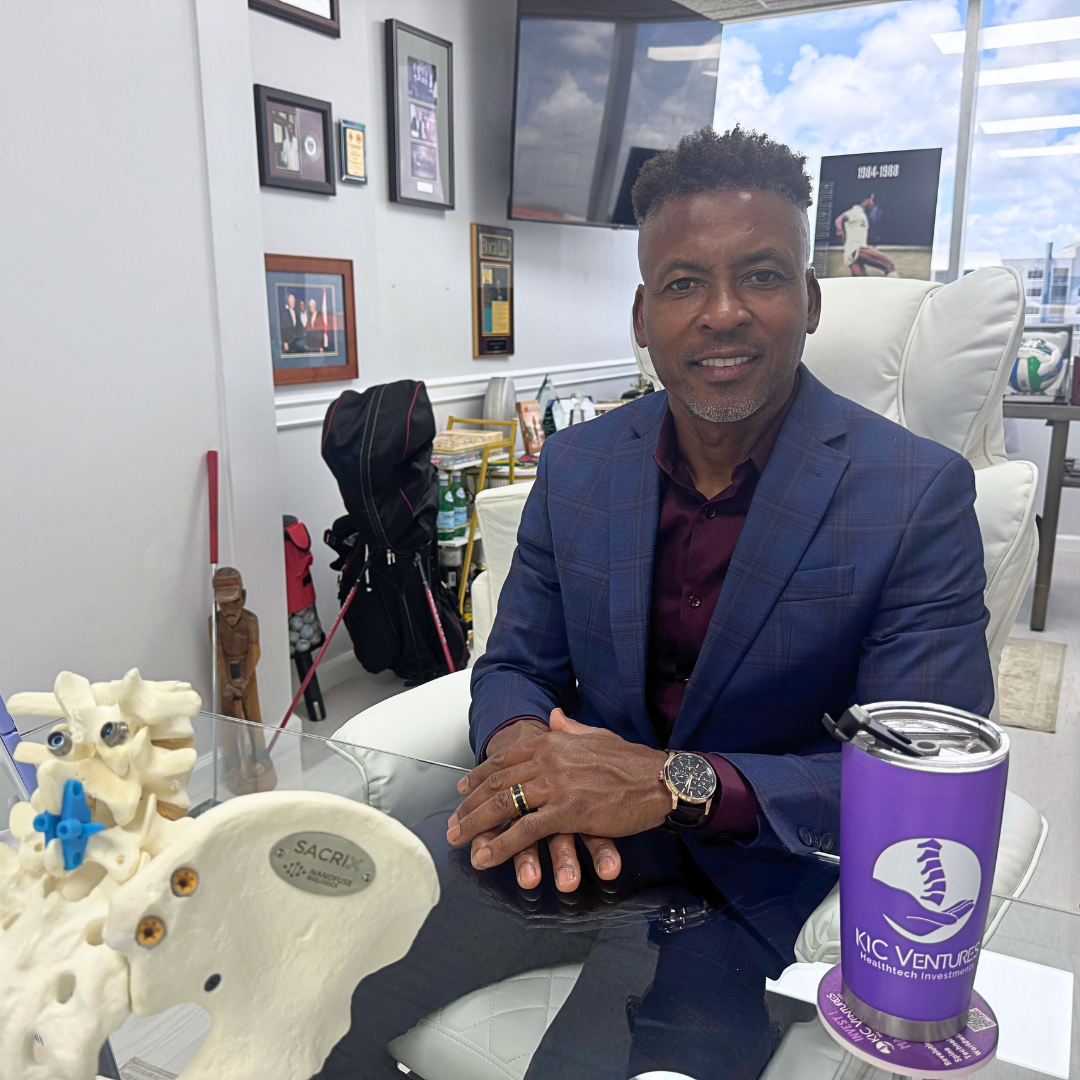
-Dr. Kingsley R. Chin MD, MBA

Who are you? Whoever you decide to be, you will live every day that way.
Today, I humbly ask my community of colleagues, mentors, students, friends, and everyone connected to me to celebrate a personal milestone.
I have reached 100 publications indexed on PubMed.
This was a dream I had more than three decades ago as a young medical student at Harvard Medical School.
I have published many other articles, book chapters, and books over the years, but my dream was specific: 100 publications indexed on PubMed.

I have always approached my dreams the same way. First, I create a vision. I visualize through my mind's eye the mountain I want to climb. Then I establish achievable goals and begin climbing.
I do not put timelines on my dreams. I commit to the journey for the long term, but I act every day with urgency.
That philosophy has shaped my life as a student, surgeon, researcher, entrepreneur, and investor.
Standing on the Shoulders of Giants
My research journey began at Harvard Medical School, where I joined the laboratory of Dr. Michael Rosenblatt.
One of my earliest mentors, Dr. Jesse Jupiter, Professor of Hand Surgery at Massachusetts General Hospital, gave me a case report to complete and publish. That assignment helped establish a discipline that has stayed with me throughout my career.
I was fortunate to work with Dr. David Ring and watch him publish one outstanding paper after another in The Journal of Bone and Joint Surgery. I admired his intellectual energy, productivity, and commitment to advancing orthopedic knowledge. I wanted to follow in his footsteps.
I was surrounded by giants, and I learned to think like them.
During my spine fellowship in Cleveland with the legendary Dr. Henry Bohlman, I witnessed another extraordinary research environment. His former fellows were producing groundbreaking work, including Dr. Alan Hilibrand's influential research on adjacent segment disease, which helped our profession better understand the long-term consequences of spinal fusion.
These experiences taught me that research was not simply about publishing. It was about asking important questions, challenging conventional thinking, and improving how we care for patients.
Building Teams That Build Knowledge
When I joined the University of Pennsylvania as Chief of Spine Surgery, artificial disc replacement was emerging as an exciting new frontier in spine surgery.
I was fortunate to work with exceptionally talented and driven residents, including Dr. Samir Mehta and Dr. Joshua Auerbach. Their intelligence, ambition, and work ethic were extraordinary.
Together, we accelerated our research, published numerous articles, and completed our first orthopedic textbook.
The Price of Independence
Eventually, I made a consequential decision to leave academic medicine because I wanted the freedom to innovate, develop new technologies, and pursue the research questions I believed could transform patient care.
That independence came at a price. I lost the daily opportunity to mentor medical students, residents, and fellows, not only to advance our research but, more importantly, to influence how future generations of surgeons would think and practice.
Looking back, I sometimes wonder whether leaving academia was one of the greatest strategic limitations of my research journey.
How do you influence thousands of surgeons trained in established traditions when you are working outside the institutions that shape those traditions?
I have learned that scientific discovery and scientific adoption are two different challenges.
Publications alone do not necessarily change minds. But the story is not over. Perhaps one of our papers will inspire a young surgeon to question conventional thinking, explore a less invasive alternative, or advance a new approach to patient care.
That possibility continues to motivate our research.
We do not publish simply to be read. We publish because we hope that knowledge will make a difference.
Building a Research Team Beyond Academia
When I entered private practice and began building medical technology companies, I continued to surround myself with people who shared my passion for research.
I was fortunate to work with dedicated research fellows, including Dr. Andre Coombs, Dr. Fabio Pencle, Dr. Mike Mills, and Dr. Jason Seale, who stayed to lead our research team.
Dr. Chukwunonso Ilogu subsequently joined our research efforts, bringing exceptional intelligence and expertise in statistics. His contributions helped us introduce greater scientific rigor into our research methodologies, strengthen our statistical analyses, and elevate the quality of our publications.
As our research program matured, we increasingly focused on multicenter clinical studies, bringing together physicians and investigators across institutions to generate stronger evidence and more broadly applicable clinical findings.
To every physician, researcher, fellow, resident, engineer, and colleague who has worked directly with me on these publications, thank you. This milestone belongs to all of us.
You have also experienced something about me firsthand.
Once I commit to finishing a project, I do not abandon it. No exceptions.
Some papers took much longer than I originally expected. Yet I learned that time often made them better.
Occasionally, when I revisit papers that I rushed to publish, I recognize opportunities where I could have done better. Those lessons have helped us improve our research processes and the quality of our subsequent work.
Persistence is not simply about finishing. It is about improving while refusing to quit.
The LESS Society: Our Lighthouse Since 2008
In 2008, we founded the LESS Society as a 501(c)(3) nonprofit organization with a mission centered on Technology Innovation, Education, and Research (TIER).
For nearly two decades, TIER has served as our lighthouse, guiding our decisions, priorities, and commitment to advancing spine care.
We have deliberately kept the LESS Society relatively private, focusing on the work rather than publicity. Through educational activities, including continuing medical education (CME), and research collaborations, we have sought to connect scientific discovery with physician education and clinical innovation.
Our research philosophy is grounded in Less Exposure Spine Surgery (LESS) and our REP principles:
Restore function.
Early diagnosis and treatment.
Preserve anatomy and motion.
These principles have shaped the technologies we develop, the surgical techniques we investigate, and the clinical questions we seek to answer.
We believe spine surgery should continue evolving toward less invasive interventions that restore function while preserving as much normal anatomy and motion as possible.
This philosophy has also guided our growing commitment to building the scientific foundation for interventional spine surgery, an emerging field focused on targeted, less invasive treatments that can increasingly be delivered in ambulatory surgery centers (ASCs).
Our vision is to help advance spine care beyond the traditional reliance on extensive spinal fusion procedures, particularly where effective motion-preserving or anatomy-preserving alternatives may be appropriate.
Together with like-minded physicians and colleagues who are trailblazers in this movement, we are building a body of clinical evidence through multicenter research, technology development, and education.
We are not simply publishing research about new technologies. We are working to establish the scientific foundation for a new approach to spine care.
The LESS Society and its TIER mission continue to be our lighthouse as we pursue this next mountain.
It Was Never About the Number
Although today I celebrate 100 PubMed publications, the number was never the ultimate purpose.
The purpose is impact.
Our research connects the medical technologies we develop with the surgical techniques we advance and the clinical outcomes we study.
We believe innovation should be supported by scientific evidence, subjected to scrutiny, and continuously improved.
Our growing commitment to multicenter studies reflects that philosophy. The future of interventional spine surgery will depend not only on innovation but also on rigorous clinical evidence, reproducible outcomes, and collaboration among physicians who share a vision for advancing patient care.
Today, our research pipeline remains deep and active. There are many more questions to answer, technologies to evaluate, and ideas to explore.
I am especially grateful that our younger researchers are continuing this journey and developing their own scientific voices.
The greatest satisfaction is not simply what we publish ourselves, but what the people we mentor will go on to accomplish.
Who Are You?
As I reflect on this milestone, I return to a question that has guided much of my life.
Who are you?
My answer is simple.
Whoever you decide you are, live every day that way.
If you decide you are a researcher, research every day.
If you decide you are an entrepreneur, build every day.
If you decide you are an investor, learn to allocate capital and create value every day.
If you decide you are a leader, lead every day.
Over time, everything you touch begins to reflect who you have chosen to become.
Your work becomes a reflection of your identity, your habits, your discipline, and your commitment.
I dreamed of publishing 100 PubMed papers as a medical student. I did not know how long it would take. I did not know all the people I would meet or the opportunities and obstacles that would shape the journey.
I simply knew the mountain I wanted to climb, and I kept climbing.
Today, I am grateful to have reached its summit.
Tomorrow, with our team and the future generations who join us, we will choose another mountain.
Dream big. Set achievable goals. Act every day with urgency. Commit for the long term.
And when you reach the summit, celebrate the people who helped you climb, then find the next mountain.
There is always another mountain to climb.
To everyone I have been blessed to share moments with along this journey, I wish you the very best. Thank you for being part of my life, for the lessons we shared, and for helping shape the person I have become.
With gratitude,
Kingsley R Chin, MD MBA
Board-Certified Orthopedic Spine Surgeon Professor of Orthopedics and Spine Surgery Chief Executive Officer, KIC Ventures Distinguished Fellow, North American Spine Society Fellow, American Academy of Orthopaedic Surgeons


Comments