

My First Experience With Persistent Back Pain — What It Taught Me About Being a Spine Surgeon and Why Our Field Must Evolve
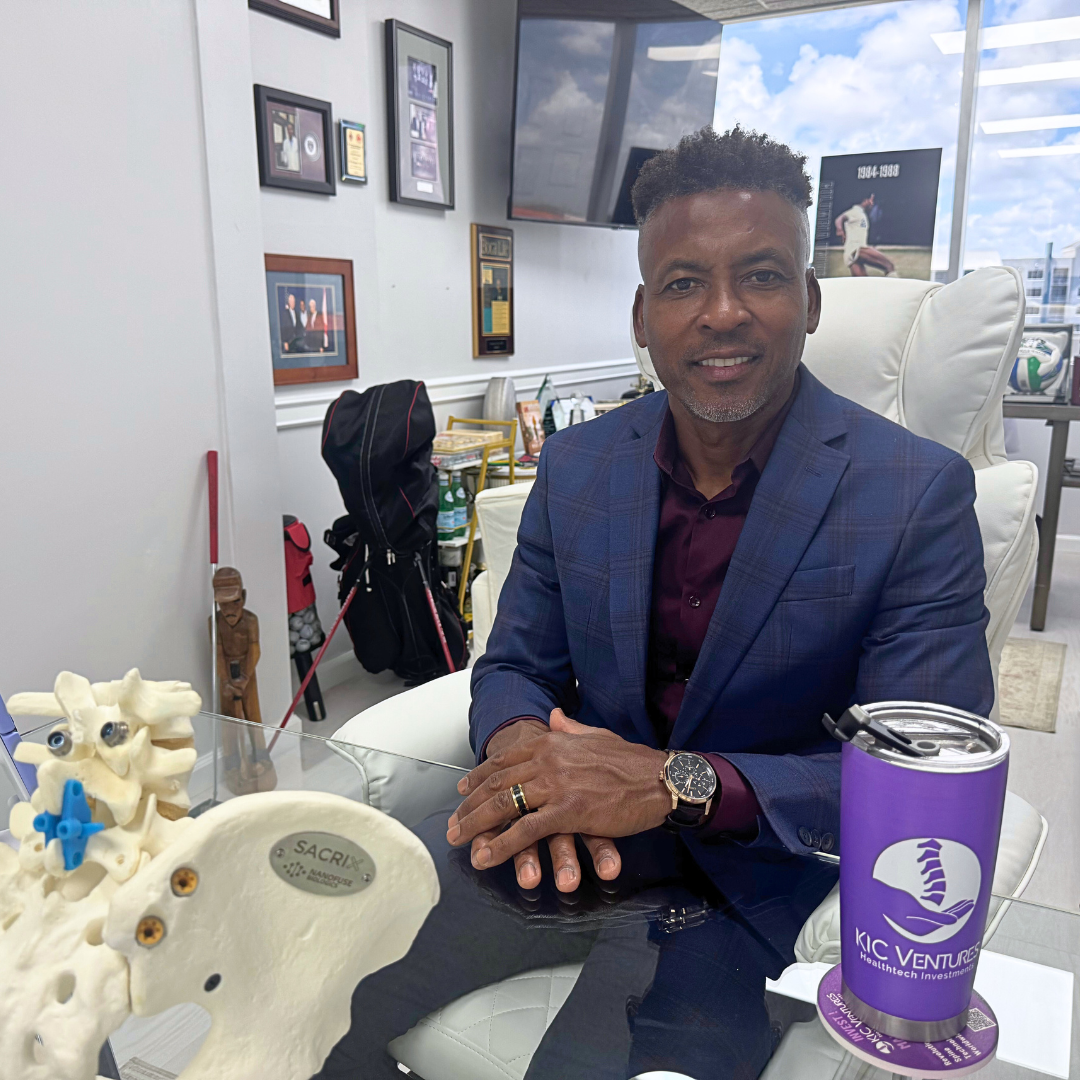
My first article of 2026

I understood back pain professionally long before I understood it personally.
For more than 25 years, I listened to patients describe pain that disrupted their sleep, their work, their relationships, and their sense of self. I treated it with medications, braces, physical therapy, chiropractic care, injections, and — when imaging supported it — surgery.
But in the final weeks of 2025, I experienced persistent back pain myself.
Not dramatic.
Not disabling.
But relentless.
Pain that worsened with sitting and lying down, improved only with movement, and quietly consumed mental bandwidth. Pain that made sleep difficult, concentration fragile, and simple decisions heavier than they should be.
It changed how I understood back pain — not emotionally, but structurally.
Professional Empathy Has Limits
At Harvard Medical School, I learned professional empathy — the ability to acknowledge suffering, remain composed, and act decisively. That discipline is essential in surgery.
But professional empathy has limits.
You can treat pain without fully understanding what it means to live with it day after day. You can recommend escalating interventions without appreciating how seductive “one more option” becomes when pain feels endless.
I first glimpsed this distinction years ago when my mentor, Dr. Henry H. Bohlman — one of the greatest spine surgeons to ever live — described his own spine surgery. He underwent a decompression without fusion and told me it “hurt like hell” for two weeks.
That conversation stayed with me.
Now, experiencing persistent pain myself, I understand it in a way no textbook or clinic visit could teach.
When “No Choice” Becomes the System’s Default
I immediately thought of Tiger Woods.
Six spine surgeries.
No patient — elite athlete or otherwise — chooses that path unless they believe there is no alternative. His story is not about toughness or perseverance. It is about what happens when a system funnels people toward progressively invasive solutions because it lacks widely adopted, durable alternatives.
Most spine care today is delivered by clinicians who have never experienced persistent back pain and have never had to recover from spine surgery themselves.
The result is predictable.
Natural anatomy is removed.
Motion is eliminated.
Titanium screws, interbody cages, and biologics become the default response to radiographic findings.
When surgery fails, the answer is often more surgery — more invasive, more expensive, more destructive.
Even when fusion “works,” patients frequently enter a cycle of adjacent-segment degeneration that turns success into a countdown.
“When pain becomes persistent, patients don’t choose surgery — they surrender to it.”
REP: A Different First Principle
REP — Restoring Function, Early Intervention, Preserve Anatomy — is not a slogan. It is a philosophical departure.
REP starts from different questions:
What is the true pain generator?
Can function be restored without sacrificing anatomy?
Can intervention occur earlier, before degeneration becomes destiny?
Can motion be preserved rather than eliminated?
These questions challenge a system built on late-stage intervention, irreversible anatomy loss, and reimbursement tied to procedural complexity.
Which is precisely why REP has always created friction.
Why Challenging the Status Quo Creates Resistance
When someone inside a system questions its foundational assumptions, two reactions emerge.
Some colleagues express relief: “You’re saying what many of us think but can’t afford to say.”
Others respond with discomfort or dismissal — not necessarily because the ideas are wrong, but because they destabilize entrenched incentives.
This is familiar territory for physician-entrepreneurs.
Systems rarely welcome internal disruption.Especially when it threatens revenue, hierarchy, and identity.
Progress is rarely neutral.
Why NANISX and AxioMed Exist
NANISX was founded to operationalize REP — not as theory, but as practice — by enabling interventional spine solutions that treat pain generators earlier and less invasively.
AxioMed was acquired for a complementary reason: to offer a future beyond rigid fusion through viscoelastic disc replacement, restoring motion and preserving anatomy for patients who would otherwise face fusion as their only option.
These are not incremental plays.
They are structural alternatives to how spine care is delivered, monetized, and owned.
Physician Ownership Is the Real Disruption
The most disruptive force in spine care is not a device.
It is physician ownership.
Ownership of technologies.
Ownership of care pathways.
Ownership of surgery centers.
Ownership of data, outcomes, and innovation itself.
When physicians own the system, incentives realign with patients.When they do not, systems optimize for volume rather than value.
REP cannot scale inside an environment that profits from late intervention and irreversible anatomy loss.
Spine surgery does not need abandonment — it needs evolution.
A Final Reflection
Persistent back pain did not make me angry.
It made me precise.
It confirmed what decades in spine care had already suggested: our field must take ownership of its future — not defensively, but responsibly.
History shows that meaningful change is rarely comfortable for those who benefit from the status quo. For physician-entrepreneurs committed to patients over systems, discomfort has always been part of the job.
That price has not changed.
— Kingsley R. Chin, MD, MBA
Orthopedic Spine Surgeon


Comments