

Exploring Lumbar Spine Fixation: A Comparative Biomechanical Study
- Anshul Jain
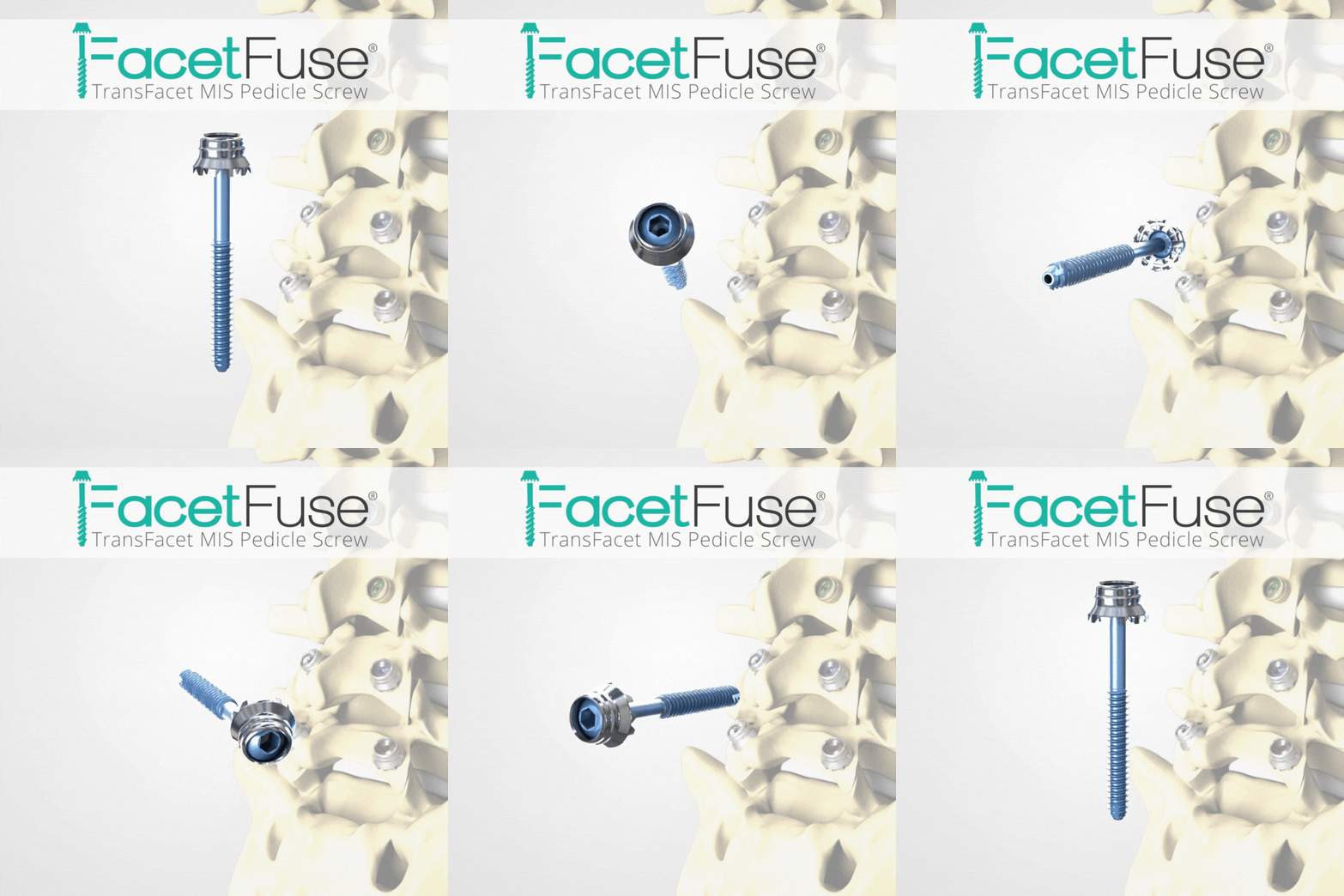
In the realm of spinal surgery, the choice of fixation method plays a pivotal role in patient outcomes. A study published in Spine in 2003 delves into the biomechanical performance of two prominent fixation techniques: facet screw fixation and pedicle screw fixation. Conducted by researchers at the Cleveland Clinic Foundation's Spine Research Laboratory, this investigation provides valuable insights into the stability and efficacy of these methods under varying conditions
Study Design and Methodology
The study utilized lumbar motion segments, subjecting them to both short-term and long-term cyclic loading to simulate physiological stresses. In the short-term phase, specimens underwent six cycles of compression, flexion, extension, lateral bending, and torsion. Subsequently, they were instrumented with either bilateral semicircular interbody spacers and pedicle screws or transfacet pedicle screws. The testing sequence was then repeated. For the long-term phase, specimens were loaded to 6 Nm of flexion bending for 180,000 cycles to assess endurance under prolonged stress. PubMed
Key Findings
-
Short-Term Analysis: Both fixation systems demonstrated significantly greater stiffness and reduced range of motion compared to the intact state. Notably, in flexion, transfacet pedicle screw specimens exhibited significantly greater stiffness than traditional pedicle screw specimens. PubMed
-
Long-Term Analysis: Over 180,000 cycles, neither the stiffness nor the range of motion showed significant changes, indicating that both fixation methods maintained their stability under repetitive loading. Furthermore, no significant differences were observed between the two fixation systems. PubMed
Conclusions
The study concludes that both transfacet pedicle screw fixation and traditional pedicle screw fixation provide comparable stability and performance under both short-term and long-term repetitive cycling. This suggests that facet screw fixation can be a viable alternative to pedicle screw fixation, offering similar biomechanical benefits. Such findings are crucial for clinicians considering minimally invasive surgical options, as they highlight the potential efficacy of facet screw fixation in achieving desired spinal stability.
For more detailed information, the full study can be accessed through PubMed: A biomechanical comparison of facet screw fixation and pedicle screw fixation: effects of short-term and long-term repetitive cycling.